
Spaces that heal: what science found in 1984 and changed architecture’s vision of wellbeing

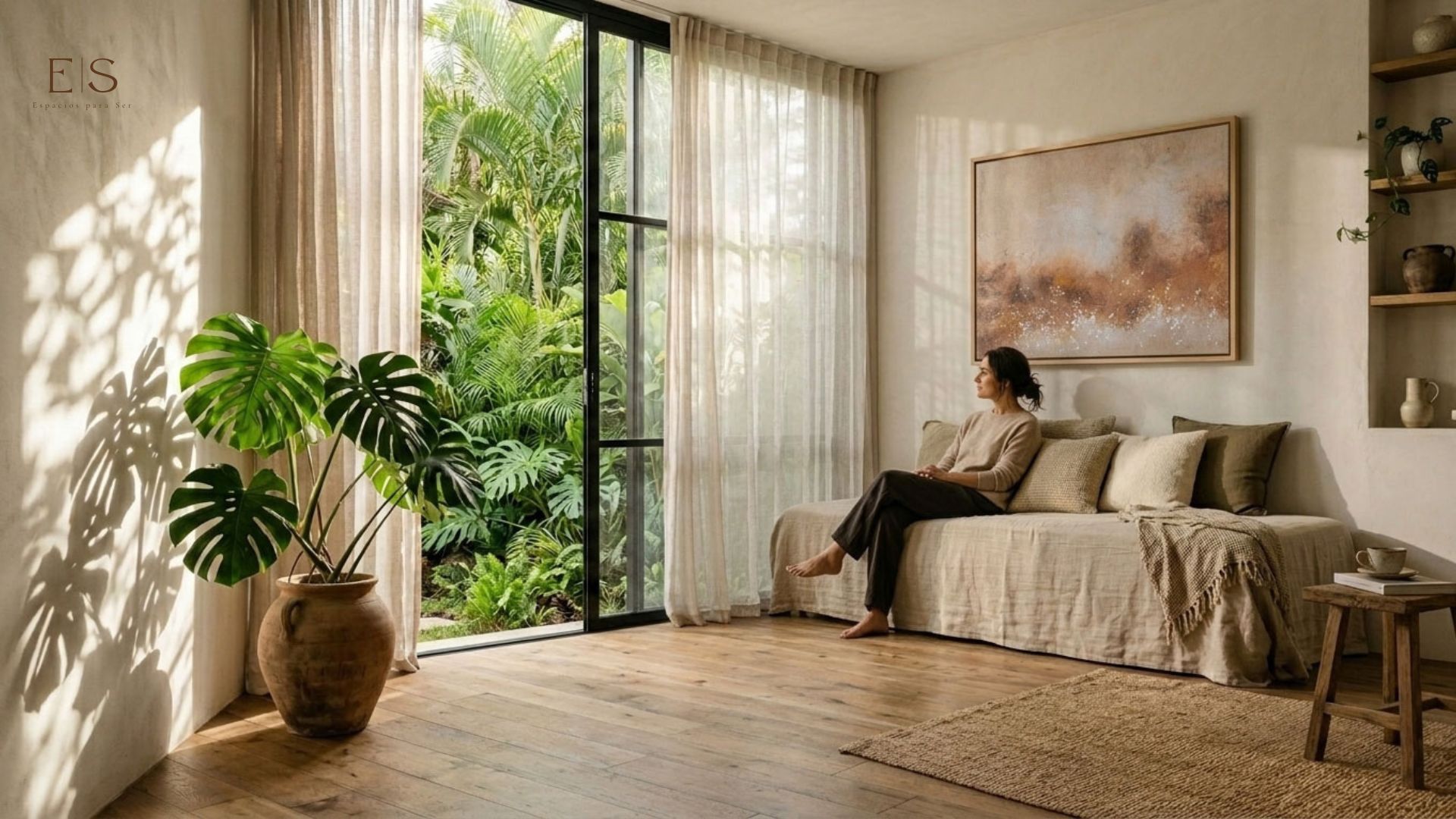
In 1984, a researcher at the University of Delaware did something apparently simple: he compared the recovery of 46 patients after gallbladder surgery. They were all in the same hospital, on the same floor, following the same protocol. The only difference was the view from the window. Some patients looked out at trees. Others, at a brick wall.
The results were published in Science. Patients with a view of the trees needed significantly fewer opioid analgesics, had fewer negative comments in nursing notes, and were discharged, on average, one day earlier.
It was not anecdote. It was not coincidence. It was peer-reviewed science in one of the most prestigious journals in the world — and it changed hospital design protocols on a global scale.
The question that study left open is the one that interests me: if an environment you don’t control (a hospital you didn’t choose, with a window you didn’t pick) has that power over your biology, what is the space you inhabit 90% of the time doing to you?
The science behind healing spaces: what clinical environments already know
Neuroarchitecture research was born, in large part, in clinical settings, and for a very specific reason: in clinical contexts, results are measurable. Days of hospitalisation. Analgesic doses. Heart rate. Blood pressure. There is no room for subjective impressions when the goal is patient discharge.
That rigour produced data that today serves as reference in Evidence-Based Design, the field that applies scientific research to the design of healthcare environments.
Plants in the recovery room. Park and Mattson (2009) compared post-surgical patients in rooms with natural plants versus rooms without them. Patients with plants required fewer analgesics, had lower blood pressure and heart rate, reported less anxiety and less fatigue after discharge. It was not a secondary psychological effect, it was measured physiology.
Direct sunlight. Walch and collaborators (2005) documented that patients in rooms with greater sun exposure received 22% fewer analgesics per hour and reported significantly lower pain levels. The mechanism is not metaphorical: the spectrum of natural light activates serotonin production and regulates cortisol directly, without intermediaries.
The combination matters. İriağaç and collaborators (2022) tested something more complex: nature paintings, plants and music in the waiting room of patients awaiting their first chemotherapy session. The group with the intervened room showed an average heart rate 7.6 beats per minute lower than the control group. Three elements. One room. 7.6 beats less.
These studies do not measure sensations. They measure biology. And they do so in environments the person did not choose, does not control, and arrives at during one of the most vulnerable moments of their life.
What they demonstrate is that the environment is not neutral. Space has real, measurable physiological effects, regardless of whether the person in it consciously perceives them.
The question this opens: if those effects occur in a clinical space (designed for healthcare efficiency, not for wellbeing) what happens when those principles are applied intentionally to the space you inhabit every day?
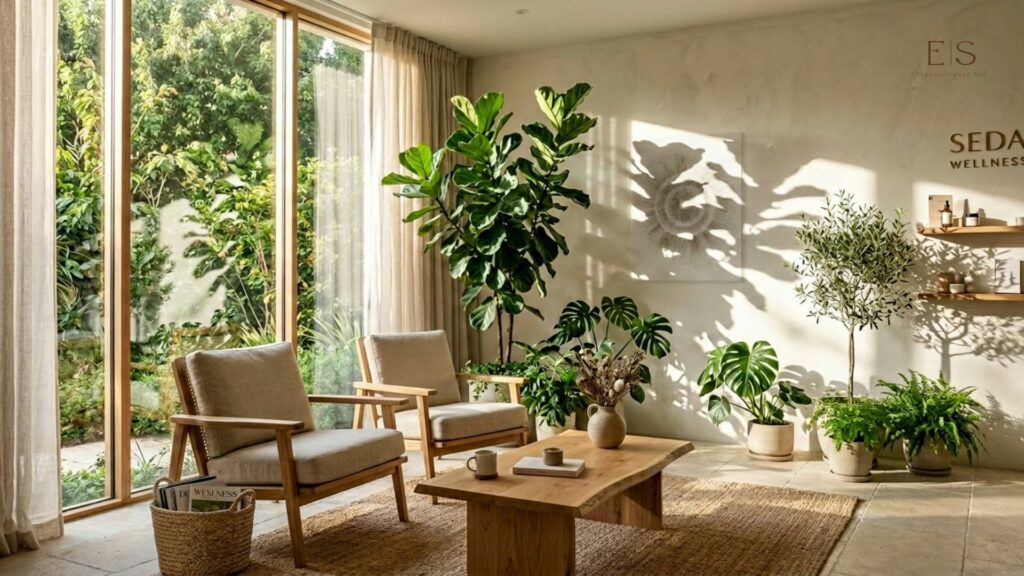
Why your body responds to space before you think
There is a question underlying all this data: why? Why does a plant in a room lower blood pressure? Why does a view of a tree reduce the need for morphine?
The answer lies in the autonomic nervous system, and in a mechanism that neuroscientist Stephen Porges described in 2011 as neuroception.
Neuroception is the capacity of the nervous system to constantly evaluate the environment for signals of safety or threat, below the threshold of conscious awareness. You don’t decide it. It doesn’t pass through the prefrontal cortex. Your biology does it, in milliseconds, before you have formed any thought about the place where you are.
That is why you enter certain spaces and your body relaxes without knowing why. And why in others you have been there for hours and remain tense, even though rationally there is nothing to worry about. Your nervous system has already made a decision before you have thought anything at all.
The data confirms the mechanism. Richard Taylor (1999) demonstrated that the fractal patterns of nature (the geometry of wood, stone, plants, forests) reduce the physiological activation of stress by up to 60% compared to artificial geometric patterns. The nervous system recognises these patterns as signals of a safe environment. It is an evolutionary mechanism millions of years old that no industrial design has managed to replicate.
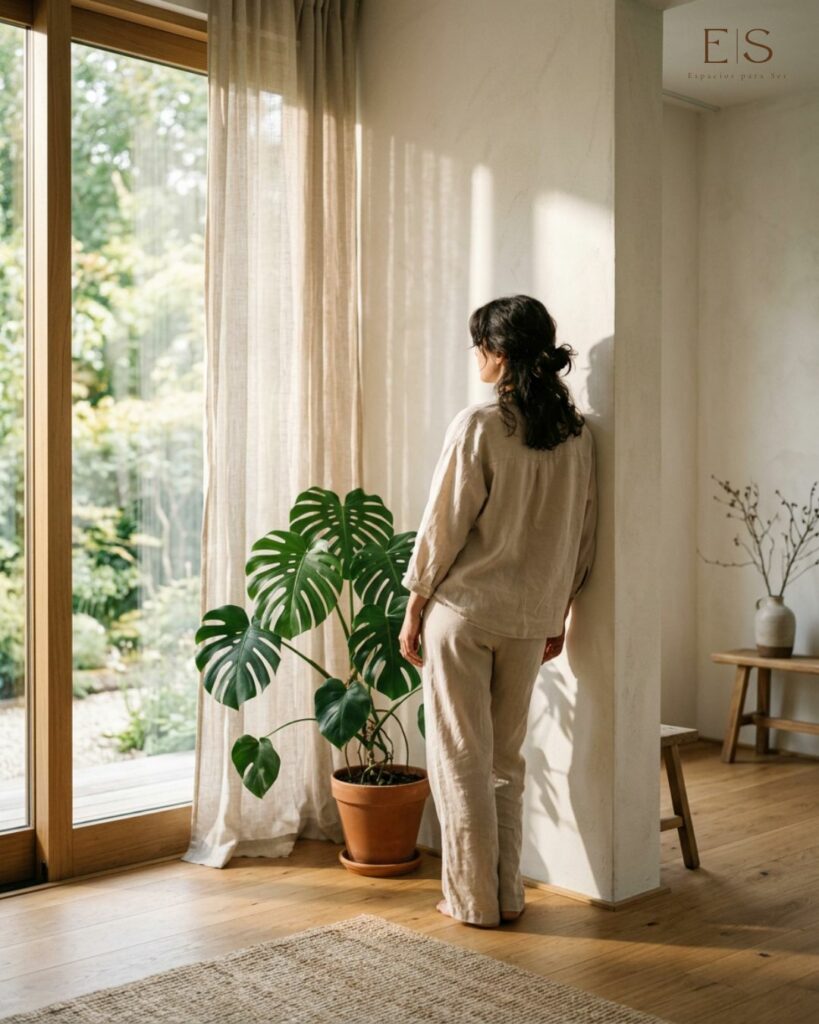
Park and collaborators (2010) documented that 15 minutes in a natural environment produce a 12.4% reduction in cortisol, a decrease in sympathetic nervous activity and a measurable reinforcement of the immune system. Fifteen minutes in a forest. The effect is real, quantified and replicated across 24 different forests in Japan.
The conclusion that emerges from all this research is direct: the nervous system does not distinguish between real nature and materials that evoke it. Wood, natural stone, organic forms, light that changes throughout the day — all of these elements send safety signals to the nervous system in the same way a real natural environment does.
Clinical spaces use this by protocol, because the results are measurable and published. You inhabit your home 16 hours a day. What signals is it sending you?
The space you inhabit 90% of the time
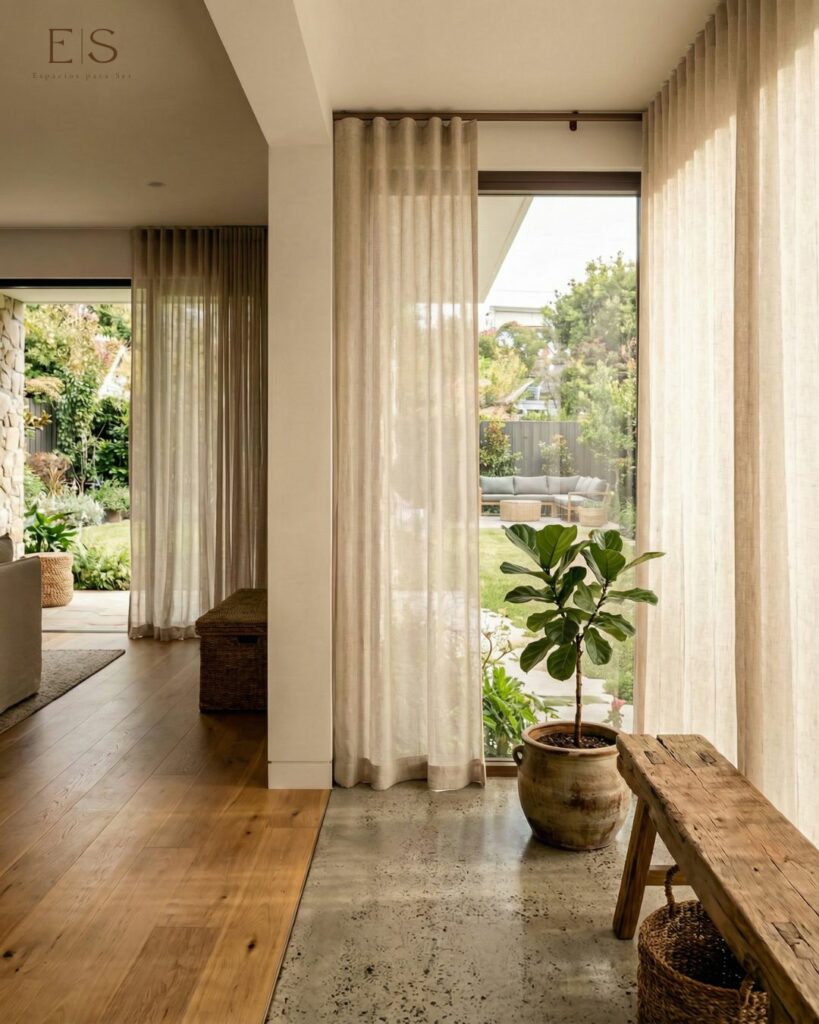
White and collaborators (2019) published a study with more than 20,000 people that reached a conclusion as simple as it is definitive: spending 120 minutes a week in natural environments produces measurable wellbeing. You don’t need a forest. You don’t need a garden at home. You need connection with the natural, and that connection can be created within the spaces you already inhabit.
Biophilia applied to the home (materials such as wood or stone, organic textiles, plants, natural light that follows the rhythm of the sun) activates the same nervous system regulation mechanisms as the outdoor natural environment. It is not decoration. It is physiology applied to domestic space.
The most common pattern I observe is this: someone who comes out of a health crisis (burnout, hospitalisation, a prolonged period of anxiety or insomnia) and returns to a space that generated or maintained that situation. This person has worked on their inner life, has done therapy, has changed habits, has learned tools to regulate their nervous system. But the space where they live continues to send alert signals to their biology every time they walk through the door.
The space is not the cause of the crisis. But it can be part of the diagnosis, and part of what sustains or interrupts the recovery.
Vastu Shastra, the ancient system of conscious design originating in the Vedic tradition, has spent millennia organising spaces according to how they affect the wellbeing of those who inhabit them. The orientation of rooms, materials, the relationship between space and sunlight, the flow between areas of activity and areas of rest, all of it designed so that the environment supports the human being rather than exhausting them.
Before neuroscience existed, Vastu already knew what studies today confirm: the geometry, orientation and materials of a space affect the biology of those who inhabit it. Today science names and measures what Vastu was already organising with precision more than 5,000 years ago.
And what both say is the same: space is not a passive background canvas. It can accompany your recovery and your wellbeing, or it can interrupt and block your processes.
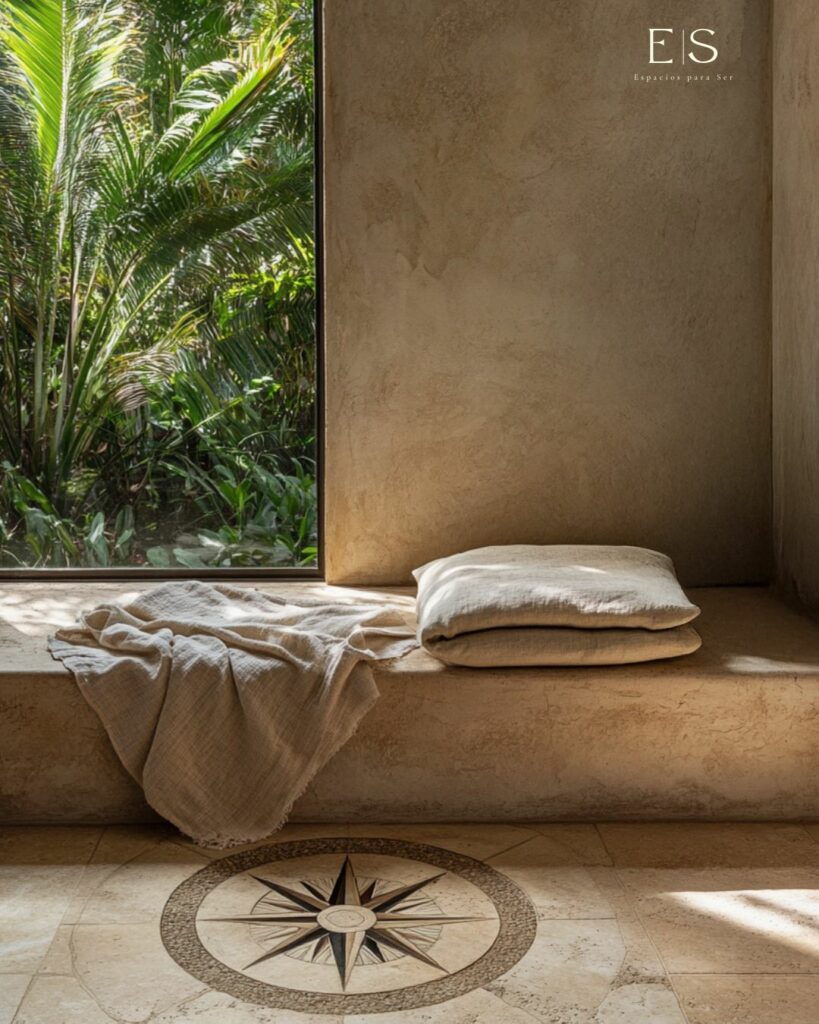
What you can do in the space you have
I am not only talking about a renovation. I am also talking about adjustments to the environment and practices that activate the same mechanisms documented in the research above. The key is not to change everything, it is to create conditions that lower the resistance of the nervous system.
A designated corner for breathing. Lehrer and Gevirtz (2014) documented that breathing at 5.5 breaths per minute (5.5 seconds of inhalation, 5.5 of exhalation) produces cardiac coherence: the rhythm of the heart and the respiratory rhythm synchronise, generating the maximum possible heart rate variability. A space that the nervous system consistently associates with this practice multiplies the effect. The environment becomes a starting signal: you enter, and the body already knows what is coming.
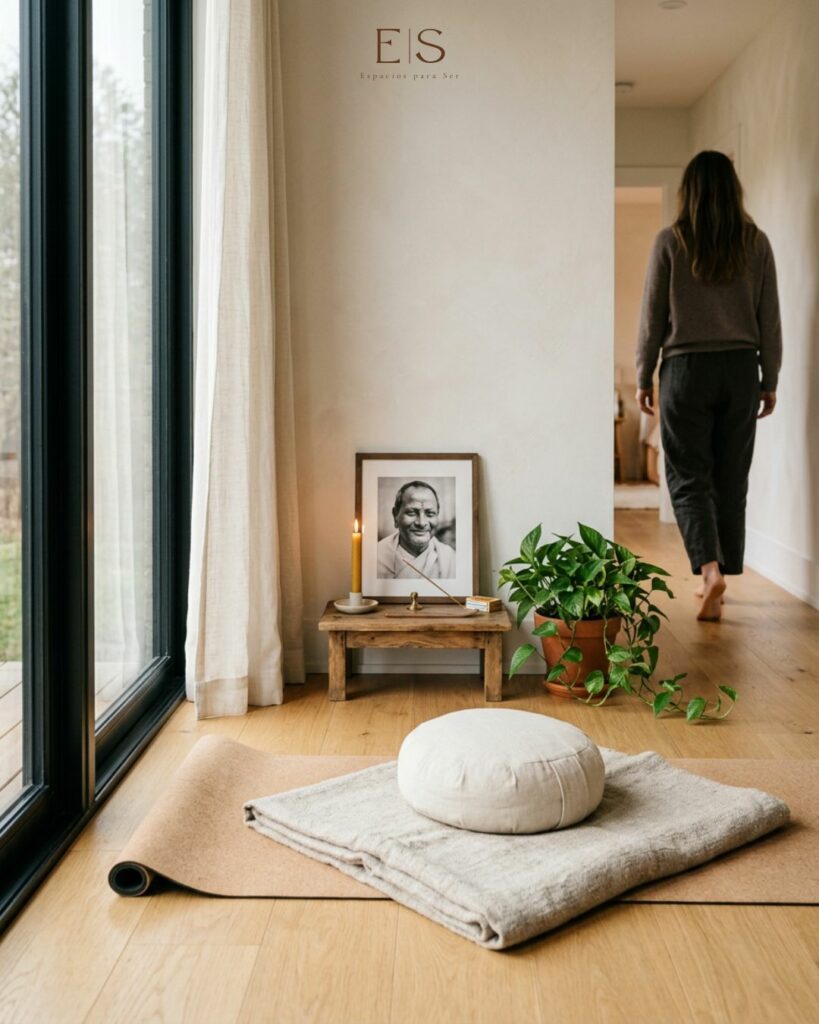
Slow movement and the space where it happens. Pascoe and collaborators (2017) published a meta-analysis of 25 studies that concluded yoga reduces cortisol levels comparably to anxiolytic medication in people with moderate anxiety. The space matters: a floor of natural material, direct or diffused light, absence of elements that activate the neuroception of threat. The same movement in a space that sends safety signals has a different effect than the same movement in a space that activates the defensive system.
Meditation and the structure that sustains it. Hölzel and collaborators (2010) documented that regular meditation practice widens the window of tolerance to stress and produces structural changes in the amygdala, the region of the brain that manages the fear response.
The space does not meditate for you. But a well-configured space reduces the resistance to starting the practice and amplifies the effect once you have begun.
The integration is what changes the equation: it is not the space alone, nor the practice alone. It is the space that facilitates the practice. The environment that tells the nervous system it can let go.
What I often find in my projects
The most frequent pattern is this: the person has worked on their inner life. They have done therapy, incorporated practices, changed habits. But the space they inhabit continues to send alert signals to their nervous system. The inner process runs on one track. The environment, on another.
The result is that practices are harder to sustain. Rest does not fully arrive. Concentration slips away. Not because the person is not doing what is necessary, but because the space where they do all of it is not aligned with what they are trying to build.
What changes when the two are aligned (the inner work and the outer space) is measurable: practices take root with less effort, rest improves, the capacity for concentration increases. The space stops competing with the process and begins to sustain it.
I am not talking about fictional cases or promises of healing. Space does not cure. But it can be an active part of recovery, or one of the factors slowing it down that no one has identified.
When someone consults me, the first thing we do together is read the space, with the same methodology science uses to design recovery environments: what signals it is sending, what it is activating, what it could sustain differently.
If you want to see how this applies to your space
If anything I have described here resonates with you — the feeling that your space exhausts you more than it restores you, that there is a disconnect between what you work on within yourself and what you live at home — the next step is to read your space.
Here is how we can work together:
Vastu Alignment Analysis. Includes a full analysis of the entire home (not just the bedroom), incorporating the individual constitution profile (Jyotisha) as a layer of personal precision. The result is a PDF report with specific proposals for your space and your constitution, exact specification of materials, lighting, biophilia and neuroarchitecture applied to your space, plus a 90-minute video call to work through it together. Does not include a design proposal, visualisations or technical drawings. It is a diagnosis and a roadmap for the solutions your home needs — the step to understand what is not working and why.
Investment: from €450
Wellness Design Blueprint. A complete intervention. Applicable to existing homes that need renovation as well as new builds designed from scratch. This is the level of full intervention. I do not only diagnose what is not working — I design the solution. You receive visualisations of the transformed space, technical drawings, exact specification of materials, lighting, biophilia and neuroarchitecture applied to your project, and support throughout implementation. The result is an executable project, not a list of changes. Integrates neuroarchitecture, biophilia, Vastu Shastra and individual constitution profile into a single 20-25 page dossier designed for your specific space. Investment: from €1,500
If you want to explore which one fits your situation, book a free strategic conversation.
Dr. Natalia Botero
Architect specialised in Vastu Shastra, Neuroarchitecture and Biophilic Design
www.espaciosparaser.com
Scientific references
1. Ulrich RS. (1984). View through a window may influence recovery from surgery. Science, 224(4647), 420-421.
2. Park SH, Mattson RH. (2009). Ornamental indoor plants in hospital rooms enhanced health outcomes of patients recovering from surgery. Journal of Alternative and Complementary Medicine, 15(9), 975-980.
3. Walch JM et al. (2005). The effect of sunlight on postoperative analgesic medication use. Psychosomatic Medicine, 67(1), 156-163.
4. İriağaç Y et al. (2022). Effects of nature-based interventions (plants, art, music) on post-surgery recovery outcomes. Supportive Care in Cancer. PMID: 35094139.
5. Porges SW. (2011). The Polyvagal Theory: Neurophysiological Foundations of Emotions, Attachment, Communication, and Self-regulation. Norton.
6. Taylor RP. (1999). Fractal analysis of Pollock’s drip paintings. Nature, 399, 422.
7. Park BJ et al. (2010). The physiological effects of Shinrin-yoku: evidence from field experiments in 24 forests across Japan. Environmental Health and Preventive Medicine, 15(1), 18-26.
8. White MP et al. (2019). Spending at least 120 minutes a week in nature is associated with good health and wellbeing. Scientific Reports, 9, 7730.
9. Lehrer PM, Gevirtz R. (2014). Heart rate variability biofeedback: how and why does it work? Frontiers in Psychology, 5, 756.
10. Pascoe MC et al. (2017). Yoga, mindfulness-based stress reduction and stress-related physiological measures: a meta-analysis. Psychoneuroendocrinology, 86, 152-168.
11. Hölzel BK et al. (2010). Stress reduction correlates with structural changes in the amygdala. Social Cognitive and Affective Neuroscience, 5(1), 11-17.
